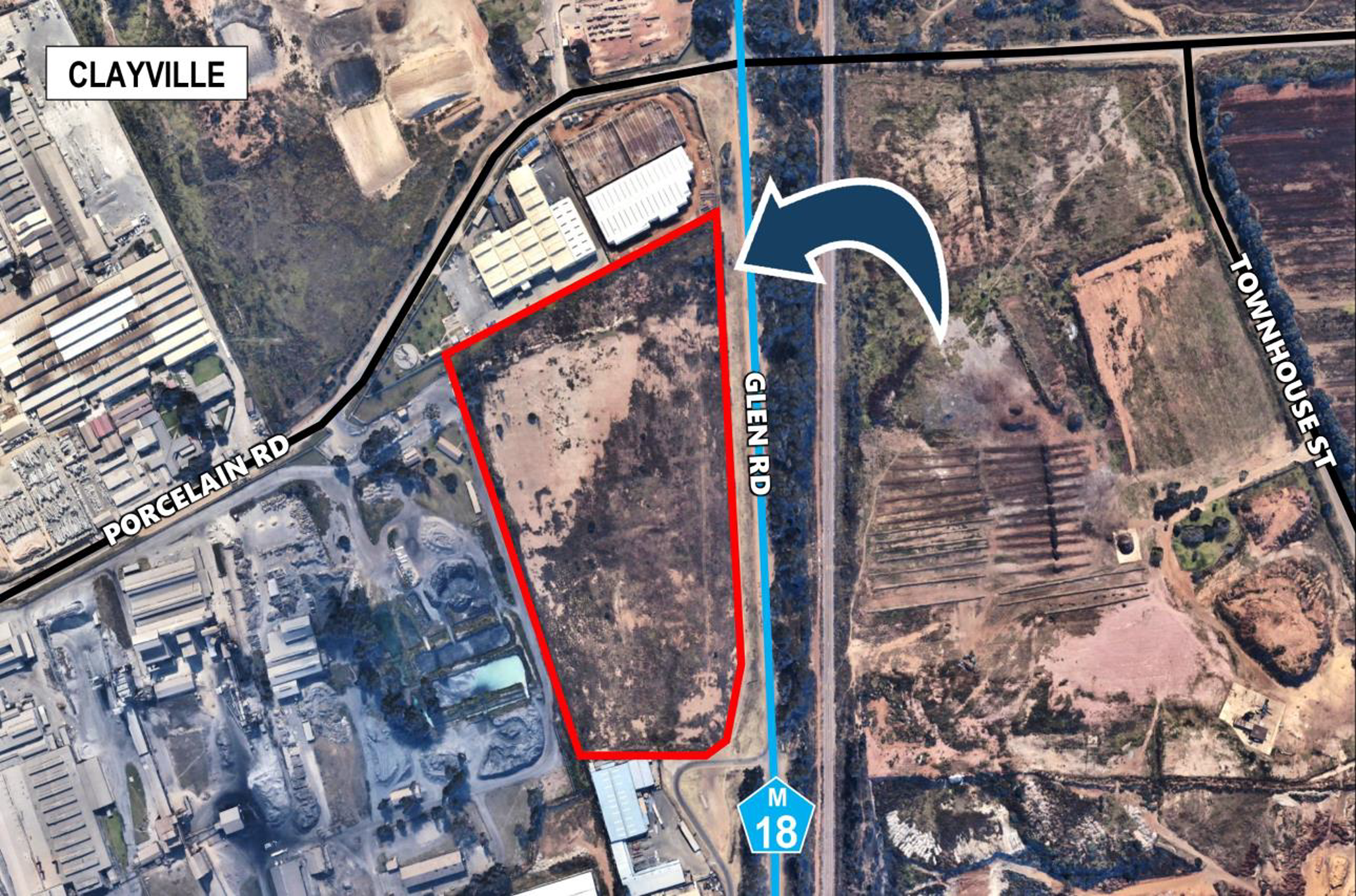
The Clayville Boom: Why Now is the Time to Develop an Industrial Mini Park
If you’ve driven through the R21 corridor recently, you’ve likely seen the cranes. Clayville, once known primarily as a heavy-industrial hub, has transformed into one of Gauteng’s most high-demand logistics and light-industrial nodes.
As we move through 2026, the data is clear: industrial property is the star performer of South Africa's real estate market, and Clayville is sitting right in the "sweet spot." For developers and investors, the case for a Mini Industrial Park here has never been stronger.
1. Location: The "Logistics Triangle"
Clayville’s biggest selling point is its geography. Situated perfectly between Midrand, Pretoria, and Kempton Park, it forms a functional logistics triangle.
Direct Access: It sits immediately adjacent to the R21 and Olifantsfontein Road (R562), offering a bridge between the N1 and the airport.
The 20-Minute Rule: You are roughly 20 minutes from OR Tambo International Airport and 25 minutes from Pretoria Central. For businesses focused on last-mile delivery and e-commerce, this proximity is non-negotiable.
2. High Demand, Low Vacancy
While other commercial sectors have faced hurdles, industrial vacancies in Gauteng’s prime corridors are sitting at record lows—often below 4%. The demand in Clayville is no longer just for massive 20,000m² warehouses. There is a massive "missing middle" of small-to-medium enterprises (SMEs), e-commerce startups, and satellite distribution hubs looking for units between 100m² and 500m². This is exactly what a Mini Industrial Park provides.
3. The "No Load-Shedding" Advantage
Infrastructure is the lifeblood of industry. Clayville is uniquely positioned due to its historical heavy-industrial zoning, which often grants it more stable power grids.
Market Insight: Many precincts in Clayville are recognized as "no load-shedding" zones or have high-capacity power availability (125A to 400A three-phase) that is hard to find in newer residential-heavy areas. For a tenant running a cold storage unit or a small CNC machine shop, this is a deal-breaker.
4. Labor and Community Synergy
A mini park isn't just about buildings; it’s about the people who work in them.
Workforce Proximity: Clayville is adjacent to Thembisa, providing immediate access to a massive, diverse labor pool.
The Mega City Project: With the ongoing Clayville Mega City housing development (set to deliver over 12,000 residential units), the area is becoming a "live-work-play" ecosystem. This reduces transport costs for staff and ensures a vibrant local economy.
5. Competitive Yields
Rentals for mini industrial units in Clayville currently range from R55/m² to R85/m², offering better yields than many over-saturated office nodes. With land prices still more accessible than neighboring Midrand or Waterfall, the "barrier to entry" for developing a mini park is lower, while the "upside" of rental growth remains high.
The Verdict: Why a Mini Park?
Modern tenants aren't looking for old, dark "sheds." They want A-grade mini-units with:
Good eave height for racking.
Secure, 24-hour access-controlled environments.
Professional office components.
Fibre readiness for e-commerce operations.
By developing a mini park in Clayville today, you aren't just building a warehouse; you are providing the critical infrastructure for South Africa’s growing digital and distribution economy.
Contact Mike Walters on 083 601 8477 or mikewalters@exprealty.net for more information on this opportunity to acquire and develop.